← Back to News
The Tatung Einstein 256 Deserves a New Game
Taking up a challenge on developing games/software for the Tatung Einstein 256 computer
August 21, 2026
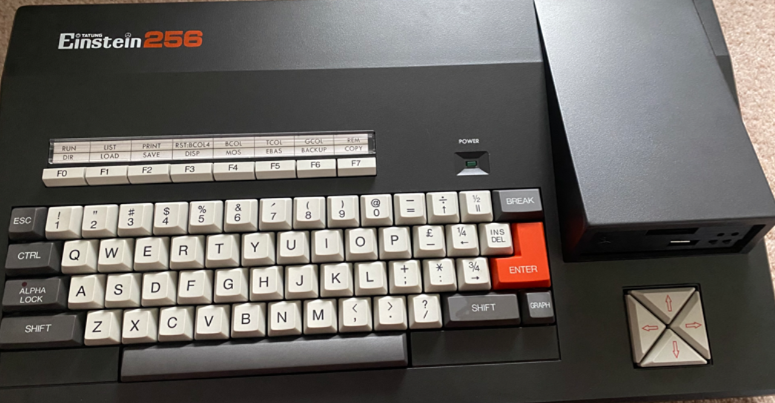
The world of retro computing is full of surprises. Machines that were once overlooked are now cherished by enthusiasts for their uniqueness, charm, and historical significance. One such system is the Tatung Einstein 256 — a powerful but commercially underappreciated machine that is crying out for a revival.
Despite its impressive specifications and capabilities, the Einstein 256 never received the recognition it deserved. Yet today, decades later, this forgotten home computer might just represent one of the most exciting untapped opportunities in retro gaming.
Released in the mid-1980s, the Tatung Einstein 256 was designed as an enhanced version of the original Einstein TC01. Unfortunately, it suffered from unfortunate timing and a rapidly shifting home computer market, which meant it never achieved widespread commercial success.
However, beneath its understated exterior lies a system that was far ahead of its time. The Einstein 256 came equipped with:
The machine also shipped with a matching 14-inch high-definition colour display, making it one of the most advanced home computers of its generation.
In spite of its power, very few games were ever commercially released for the Einstein 256. In fact, only one title — Dragon’s Lair 256 — made it to market. Another project, Batman 256, was announced but ultimately cancelled before release.
As a result, this capable platform was left largely unexplored by game developers. It became known more for its technical potential than for its software library, a fate that many now view as a missed opportunity.
Fast forward to the present, and the situation looks very different. Retro computing is booming, with a passionate global community dedicated to reviving, restoring, and reimagining classic hardware. The Tatung Einstein 256 is now ripe for rediscovery — and the lack of a dedicated game library is no longer a drawback. Instead, it represents a rare opportunity.
Imagine being the first developer in nearly 40 years to release a brand-new game for the Tatung Einstein 256. Not only would this be a technical achievement, it would also make history. The community is hungry for new content, and a modern release could showcase what this underutilised system was truly capable of.
There are several reasons why now is the ideal moment to take on this challenge:
For those intrigued by the idea of writing a new game for the Einstein 256, here is a crucial technical insight: the machine’s hardware shares many similarities with the MSX-2 platform. This means that experience with MSX-2 development — including its graphics and sound capabilities — could significantly shorten the learning curve.
The Tatung Einstein 256 remains one of the most fascinating “what if” stories in home computing. Its hardware was powerful, its design forward-thinking, yet its potential was never fully realised. That makes it the perfect canvas for a bold new project.
So here is the challenge: Will you be the programmer who creates the first new game for the Tatung Einstein 256 in decades? Will you unlock the true potential of a machine that deserved so much more than it ever received?
The door is wide open for innovation — and history is waiting to be made.
Retro computing is not just about nostalgia. It is about rediscovering old technology, pushing its boundaries, and creating something new from something forgotten. The Tatung Einstein 256 offers one of the most unique opportunities in this space — a chance to do what no one else has done and leave your mark on computing history.