


Back in the early 1980s the world of home computing was exploding with ideas, rival systems and bold experiments. Into this noisy marketplace stepped the Tatung Einstein TC01, a British built machine that arrived in 1984 with plenty of promise. While it never reached the fame of the Sinclair Spectrum or Commodore 64, the Einstein managed to carve out a curious legacy, remembered fondly by developers and retro enthusiasts.
So what went right for this unusual machine? First of all, the Einstein looked and felt like a serious bit of kit. Unlike the toy like computers many teenagers were plugging into their televisions at the time, the Einstein came with a full size keyboard and a solidly built case. It felt closer to a professional computer than a games console, which is exactly why many software developers preferred it. Typing long lines of code on a proper keyboard was a lot less frustrating than stabbing away at the rubber keys of a Spectrum.
Inside, it had a Z80A processor running at 4 MHz, a tidy amount of memory for its day, and built in 3 inch floppy disk drives, which were faster and more reliable than tape recorders that most home computers relied on. These features meant developers could work more efficiently, saving and loading programs without the long wait times that plagued tape based systems. It gave the Einstein a reputation as a machine that was better for making software than for consuming it.
But of course, no machine is without its challenges. For all its developer friendly design, the Einstein struggled in the wider market. The price was higher than the mass market favourites and it lacked the library of games that made other computers irresistible to kids and teenagers. Parents buying a computer for the living room often chose cheaper systems with bigger catalogues of titles. The Einstein therefore ended up as more of a niche tool for coders and smaller software houses.
Compared with the competition the Einstein was an interesting case. Against the Spectrum it looked more professional but less fun. Against the Commodore 64 it had speed and disks on its side but it could not match the sheer graphics and sound capabilities. Against the BBC Micro it was cheaper and still relatively powerful but without the educational push that put the BBC machine in schools across Britain. It was as if the Einstein lived in a space between these worlds, never quite managing to dominate any single audience.
What it did achieve though was a solid reputation in the developer community. Some games that would later become well known on other systems were first written and tested on the Einstein. This was thanks to its robust hardware and more reliable storage, which gave coders a smoother environment to experiment and build. In that sense, while it was not the computer found in every teenager’s bedroom, it was quietly present behind the scenes of the 1980s games industry.
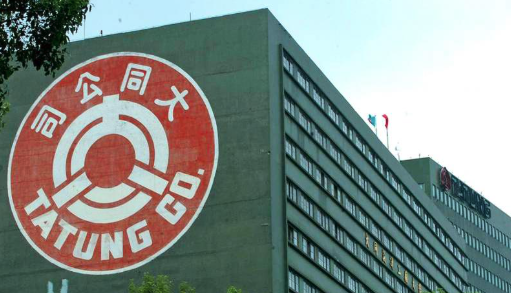
There are also quirky facts that make the Einstein stand out. It was produced by Tatung, a Taiwanese company better known for consumer electronics, but the design was very much rooted in Britain. The machine had a surprisingly long afterlife as well, being used in some television studios and by certain developers even years after the commercial failure of the system. For a machine that never sold in great numbers, it punched above its weight in influence.
Today, the Tatung Einstein TC01 is a reminder of a time when computing was still a wild frontier. Many companies were trying their luck, some building machines for fun, others for business, and occasionally a hybrid that sat somewhere in between. The Einstein might not have conquered the world, but it offered a glimpse of what developers really needed, and in that respect, it left an imprint on the story of British computing.